
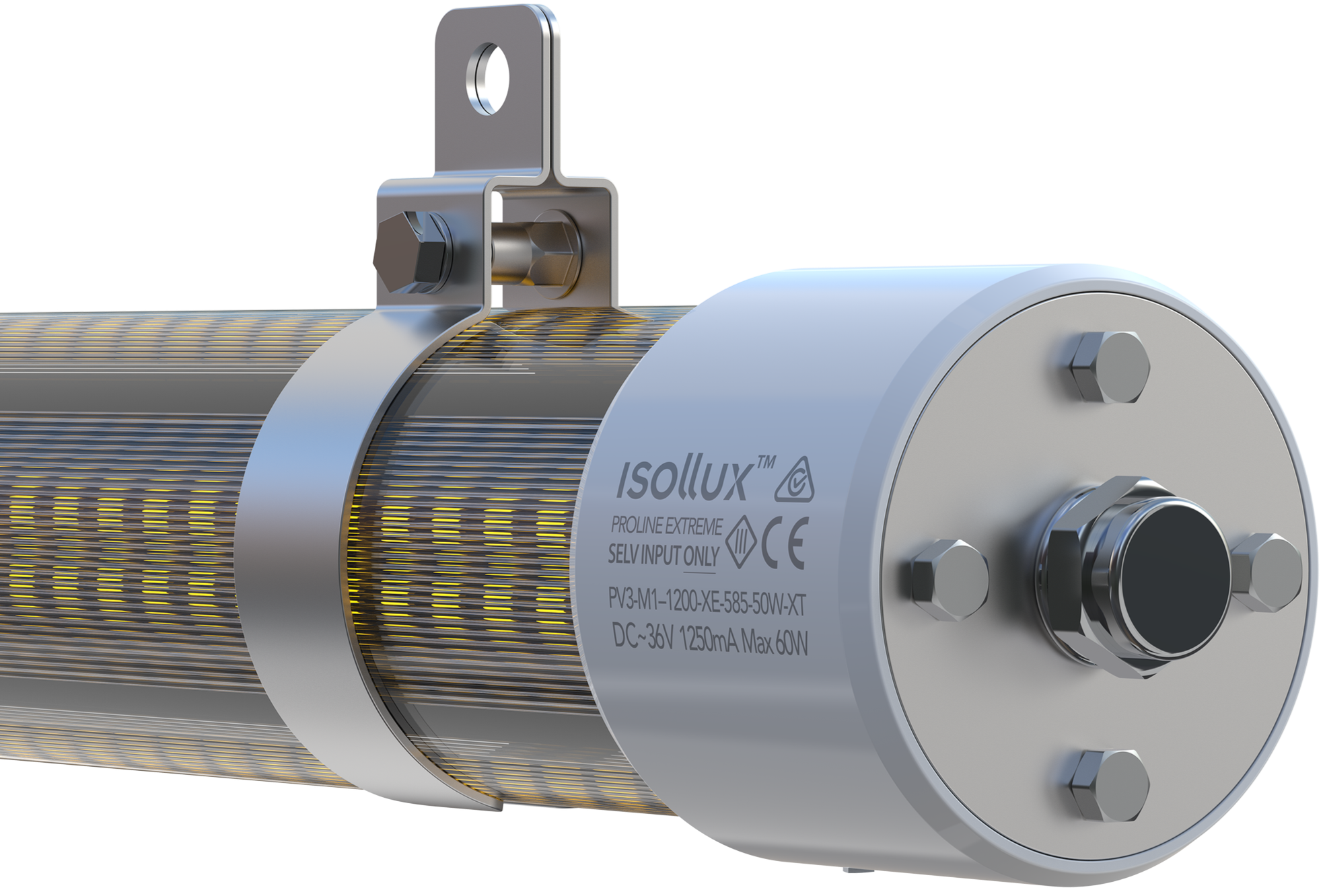
PV3 Series
One Luminaire. From Fryer to Freezer.
PV3™ was developed in partnership with SKT Belgium to solve the growing challenges facing modern food production.
Food processing facilities have always presented demanding operating conditions for lighting. High-pressure wash-down and aggressive chemical sanitisers progressively degrade conventional polymer materials, leading to increased maintenance and premature replacement of standard luminaires.
The Challenge of Automation
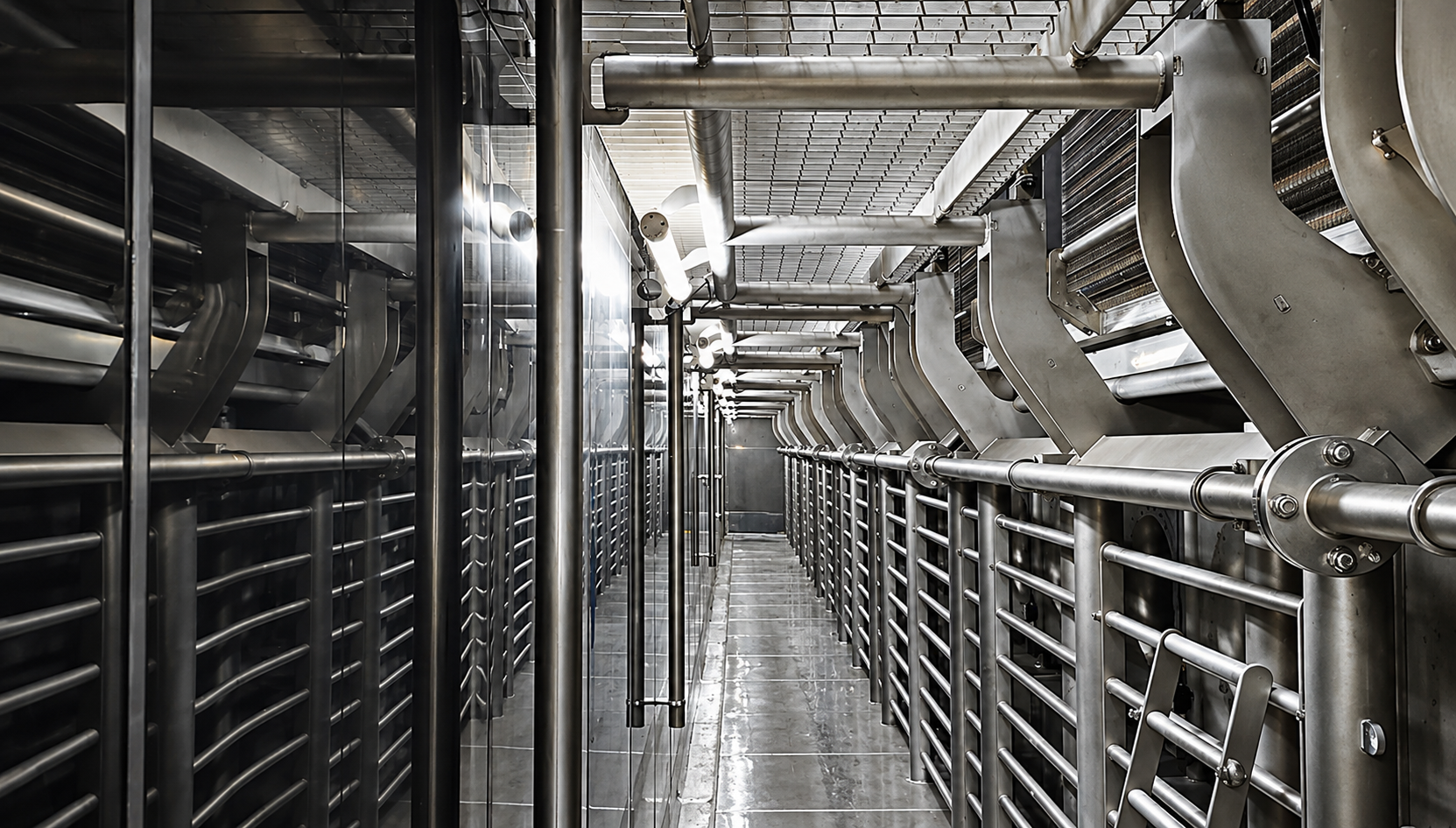
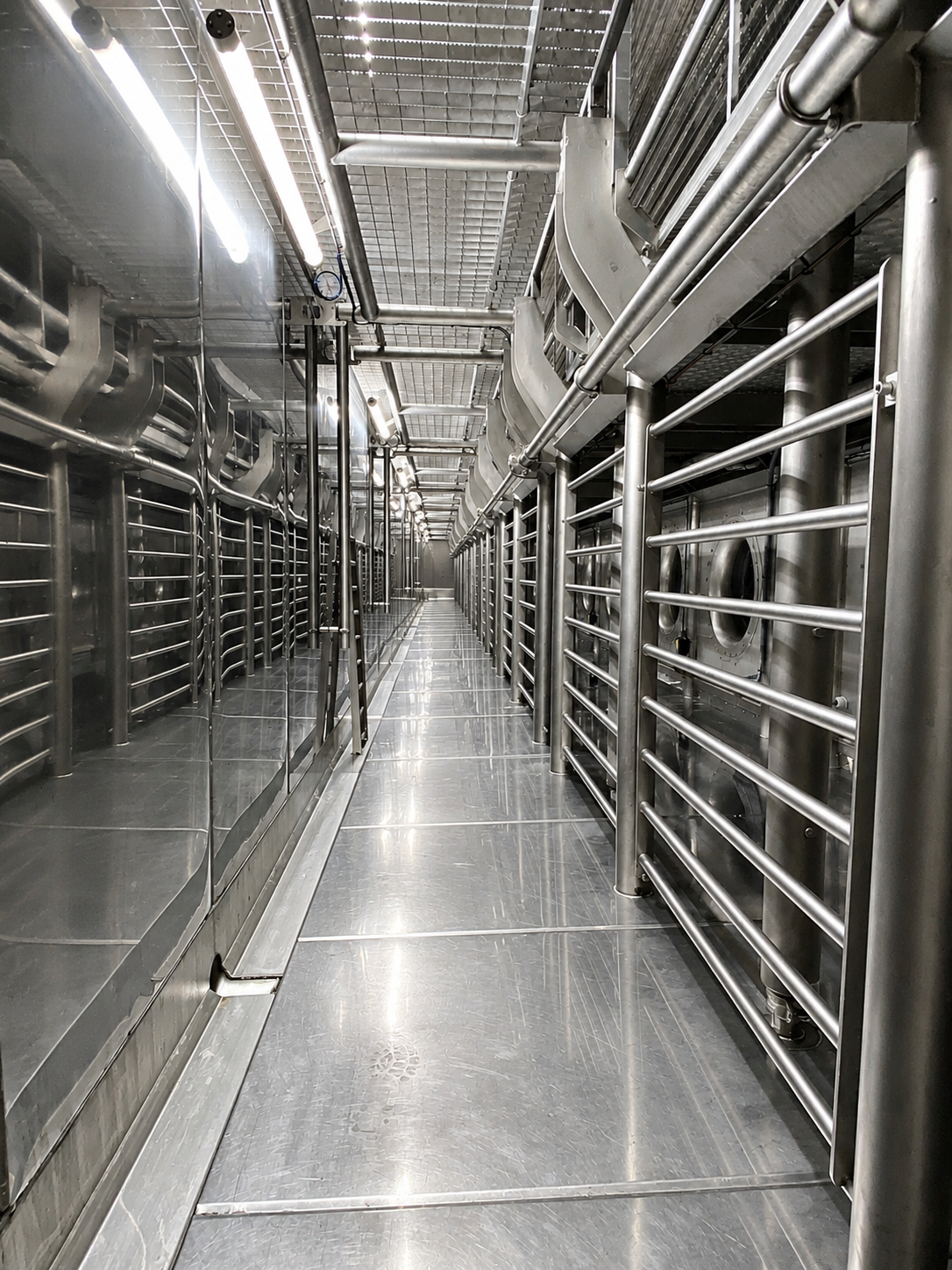
Modern Clean-in-Place (CIP) systems create even harsher operating conditions. Continuous vibration, high humidity, fryer-to-freezer temperature extremes, steam injection, aggressive chemical agents and rapid thermal cycling subject luminaires to repeated thermal, chemical and mechanical stresses well beyond the capabilities of conventional industrial LED luminaires.
Steam CIP
Extreme Humidity and Hydrolytic Stress
High Ambient Sanitation
Productivity Depends on Reliable Lighting
As food processing becomes increasingly automated, the consequences of luminaire failure continue to grow. In many processing areas there are few, if any, personnel present during normal operation, yet reliable lighting remains essential for sanitation inspections, remote monitoring and maintenance. When luminaires fail, they interrupt production, increase maintenance costs and require access to complex production equipment, where downtime is both disruptive and expensive.
Long-term reliability depends on considerably more than ingress protection. Every PV3 is engineered using conservatively specified components, de-rated electrical operating conditions and application-specific material systems to maximise service life under continuous thermal, chemical and mechanical stress.
Why Three Variants?
Different food processing environments impose different thermal, chemical and cleaning demands. The PV3 range is therefore available in three material variants, each engineered to provide the optimum balance of durability, performance and service life for its intended application.
Explore our Engineering Design and Principles
Common Product Features
Every PV3 shares the same hygienic, free-draining design and core engineering architecture. The following features are standard across the entire range.
Food Safe
IP69K Ingress Protection
IK10 Impact Resistance
High Pressure Wash-Down
Anti-Vibration
Remote Driver
Serviceable
Ambient Performance
Ambient ratings are available from −35°C to +70°C, with −25°C to +50°C specified as the standard operating range. Material systems, electrical operating conditions and remote driver architecture are matched to the intended application to deliver reliable operation and optimum service life.
Service Life
Long service life depends on conservative engineering rather than driving components to their limits.
Like all Isollux products, PV3 combines independently verified LM-80 testing, TM-21-21 reported lumen maintenance projections and conservative drive currents for high-density LED arrays, delivering predictable long-term performance.
L80 (B0) >102,000h @ Ta +50ºC (LM-80, TM21-21)
Explore how we engineer and validate LED Performance

Adjustable Light Distribution
Optional diffused optics improve visual comfort in manually operated areas, while integrated DIP switching allows the available light output to be redistributed on site. The full system output can be directed to one side or distributed through opposing, three-quarter or full 360° patterns, while the luminaire can be physically rotated to suit the task..
360º Distribution
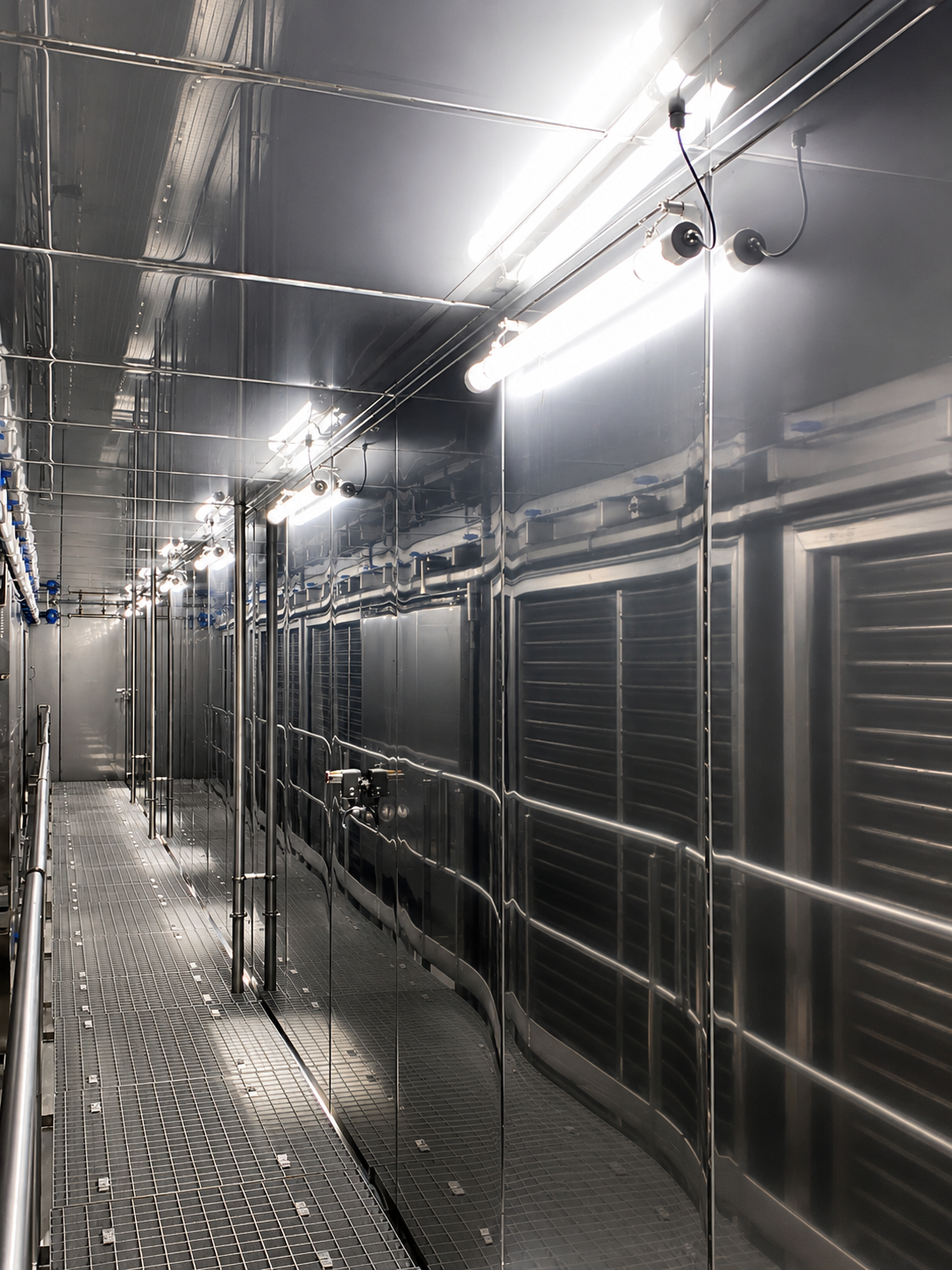
In enclosed stainless steel CIP tunnels, a 360° distribution uses surrounding reflective surfaces to deliver highly uniform illumination for direct inspection and remote monitoring.
Targeted Distribution
Where manual inspection, grading or picking is undertaken, the same light output can be concentrated onto the working surface, increasing task illuminance while reducing glare and operator visual fatigue without increasing system power.

Lens Material Options
Three lens material options allow PV3 to be matched to the environmental demands of the application, from general wash-down areas to aggressive chemical exposure, repeated thermal cycling and high-temperature processing across food production, pharmaceutical, chemical, aquaculture and other demanding industries.
M1 Clear Prismatic
M1 is engineered for the most demanding environments, combining exceptional resistance to high temperatures, steam, hydrolysis and aggressive cleaning chemicals. Developed for automated steam and hot-water CIP systems, its performance also makes it suitable for intensive sanitation, high-temperature food production, pharmaceutical and chemical processing, and other applications subject to repeated thermal and chemical exposure.
Our toughest optical-grade polymer, M1 is engineered for environments where conventional lens materials fail after short exposure to heat, steam and aggressive chemistry.
An optional internal diffuser, protected behind the M1 prismatic lens, improves visual comfort without exposing the diffusing material directly to the operating environment.
M2 Clear Prismatic
Based on the proven TPX lens technology used across the Proline range, M2 is optimised for food production requiring daily high-pressure hot-water wash-down and foam sanitation, but not for continuous high humidity or steam cleaning. Recommended for meat, dairy, refrigerated food production and general hygienic processing.
An optional internal diffuser, protected behind the M2 prismatic lens, improves visual comfort without exposing the diffusing material directly to the operating environment.
M3 Polycarbonate
M3 combines the practical and hygienic benefits of the PV3 design with a cost-effective polycarbonate lens for less aggressive environments. It provides a robust, serviceable solution for picking tables, packaging areas and general industrial wash-down applications where the additional cost and performance of specialised engineering polymers are unnecessary.
Available with diffused or clear prismatic polycarbonate lenses, M3 retains the full functionality of the PV3 system, including variable light distribution and selectable LED arrays.
PV3 Lens Selection Guide
| M1 | M2 | M3 | |
|---|---|---|---|
| Automated Steam CIP Systems | ● | ○ | ○ |
| Automated Hot-Water CIP Systems | ● | ● | ○ |
| High-Temperature Food Processing | ● | ● | ○ |
| Meat & Poultry Processing | ● | ● | ○ |
| Dairy Processing | ● | ● | ○ |
| Sanitised Aquaculture Processing | ● | ● | ○ |
| Sanitised Refrigerated Food Production | ○ | ● | ○ |
| Sanitised Conveyors & Picking Lines | ○ | ● | ○ |
| Non-Sanitised Aquaculture Facilities | ○ | ○ | ● |
| General Food Processing (wash-down only) | ○ | ○ | ● |
| General Industrial Wash-Down | ○ | ○ | ● |
● Recommended
○ Not recommended - Material or cost limitations may apply
PV3 Material Selection Guide
| M1 | M2 | M3 | |
|---|---|---|---|
| Direct Steam Exposure – Short Duration up to 134ºC | ● | ○ | ○ |
| Extreme Humidity – Steam-driven Hydrolytic Stress | ● | ○ | ○ |
| Highest Chemical Resistance | ● | ○ | ○ |
| High Chemical Resistance | ● | ● | ○ |
Material selection should be based on the cleaning regime, chemical composition, concentration and exposure conditions. For unusually aggressive cleaning protocols, consult Isollux Technical Support.
Common Construction Features
| M1 | M2 | M3 | |
|---|---|---|---|
| High Pressure Hot Water Washdown | ● | ● | ● |
| IP69K Ingress Protection | ● | ● | ● |
| IK10 Impact Resistance | ● | ● | ● |
| 316 Stainless Steel Two Part Standard Bracket | ● | ● | ● |
| 316 Stainless Steel Ring Mount Option | ● | ● | ● |
| CNC-Machined 316 Stainless Steel End Caps | ● | ● | ● |
| Blue Food Grade EPDM Seals | ● | ● | ● |
| Optional Directional LED Array Control (DIP Selectable) | ● | ● | ● |
Chemical Resistance (M1-M2 Only)
The M2 material system has been tested against elevated concentrations of the active ingredients commonly used in food processing cleaning and sanitising chemicals. M1 builds on this benchmark with enhanced performance at elevated temperatures, together with resistance to direct steam exposure and long-term hydrolysis.
| Active Ingredient | CAS No. | Description |
|---|---|---|
| Acetic Acid | 64-19-7 | Organic Acid |
| Ethoxylated Alcohols | 68131-39-5 | Non-Ionic Surfactant |
| Amines | Mixture | Cleaning / Surfactant Chemistry |
| Benzalkonium Chloride | 8001-54-5 | QAC Sanitiser |
| Benzyl Alkyldimethyl Chlorides | 68424-85-1 | QAC Sanitiser |
| Disodium Metasilicate | 6834-92-0 | Alkaline Detergent Builder |
| Dodecyldimethylamine Oxide | 1643-20-5 | Amphoteric Surfactant |
| Ethanol | 64-17-5 | Alcohol / Solvent |
| Hydrogen Peroxide | 7722-84-1 | Oxidising Sanitiser |
| Hypochlorous Acid | 7790-92-3 | Chlorine-Based Sanitiser |
| Peracetic Acid | 79-21-0 | Oxidising Sanitiser |
| Potassium Hydroxide | 1310-58-3 | Strong Alkali / Caustic Cleaner |
| Quaternary Ammonium Compounds (QACs) | Mixture | Cationic Sanitisers |
| Secondary Alkanesulphonates | Mixture | Anionic Surfactants |
| Sodium Carbonate | 497-19-8 | Alkaline Detergent Builder |
| Sodium Dodecylbenzene Sulfonate | 25155-30-0 | Anionic Surfactant |
| Sodium Hydroxide | 1310-73-2 | Strong Alkali / Caustic Cleaner |
| Sodium Hypochlorite | 7681-52-9 | Chlorinated Oxidising Cleaner / Sanitiser |

Distributed Power Architecture
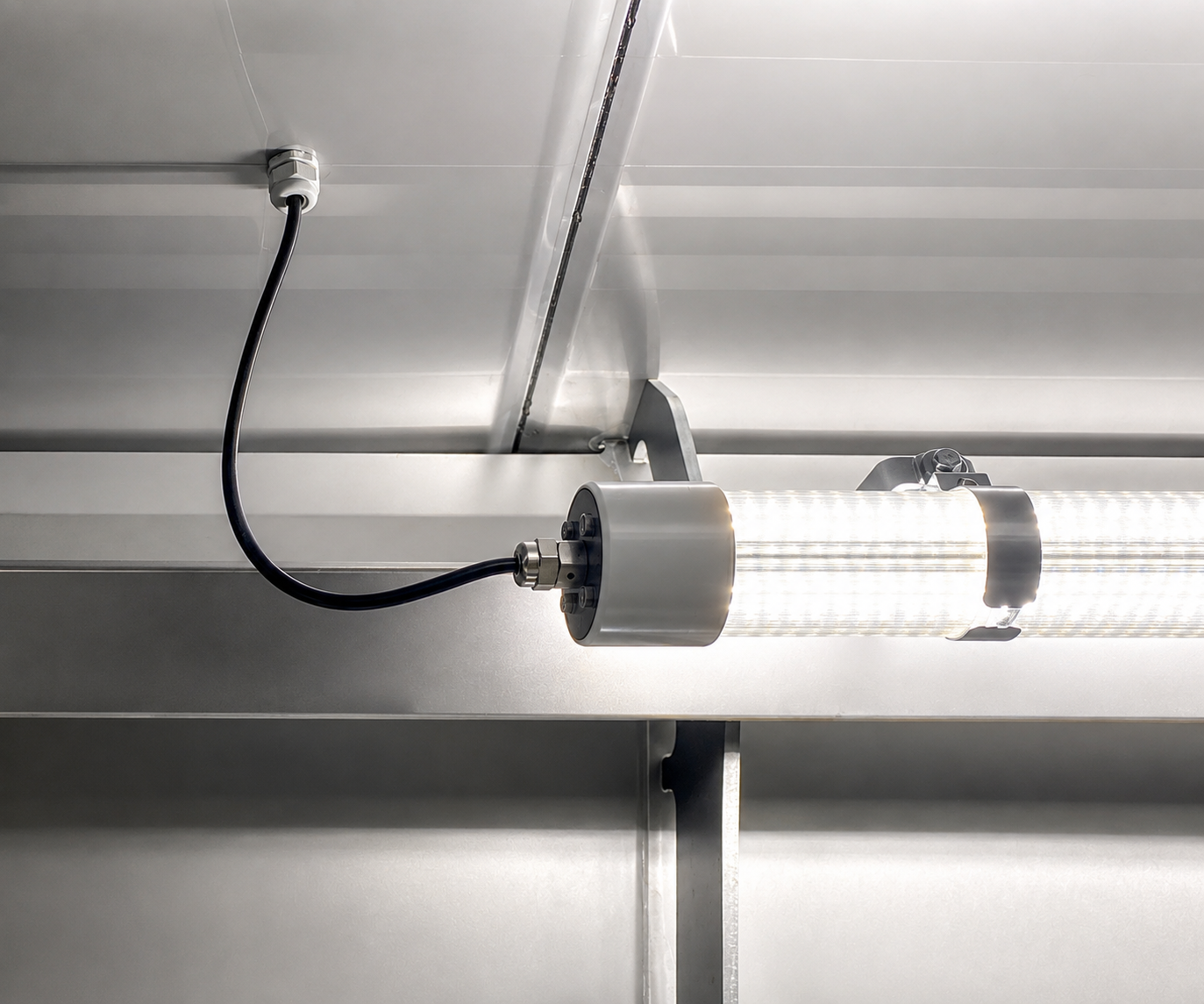
PV3 uses a distributed power architecture, with the LED driver mounted remotely from the hostile operating environment to improve long-term reliability while simplifying installation and future maintenance. The system can be configured to support individual or grouped lighting circuits, with seamless integration of lighting controls and emergency lighting systems.
The IP69K enclosure is field serviceable, providing easy access to seals and components for long-term maintenance. A fly lead is supplied as standard for straightforward installation, with in-line connection options available where required.

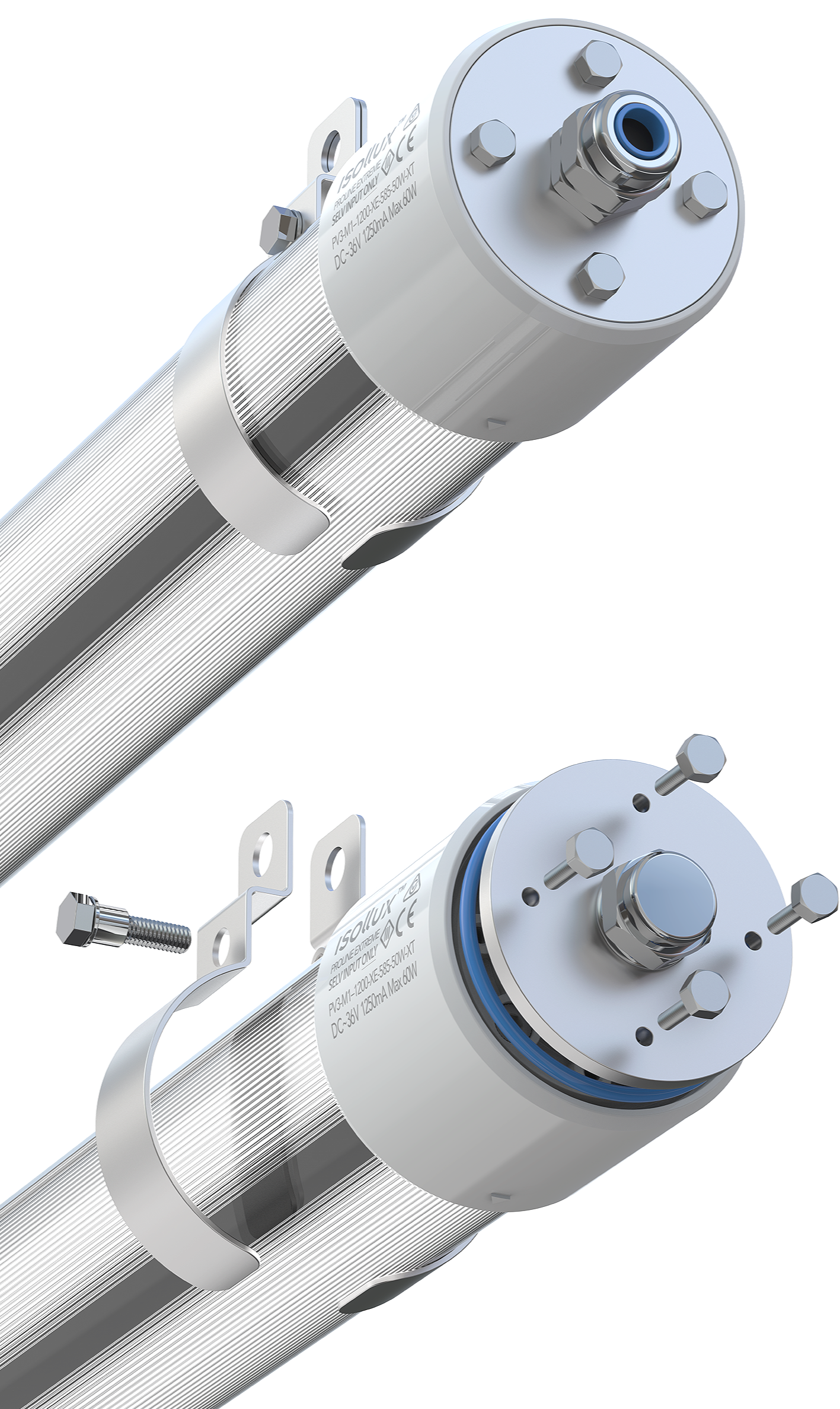
Hygienic Adjustable Mounts
Stamped stainless-steel brackets secure the luminaire while damping vibration in CIP tunnels. The open hygienic design allows chemicals and residues to drain freely, with flexible positioning for easy installation, rotation and adjustment. An optional rubber bush can be added to absorb excessive movement and further isolate vibration.
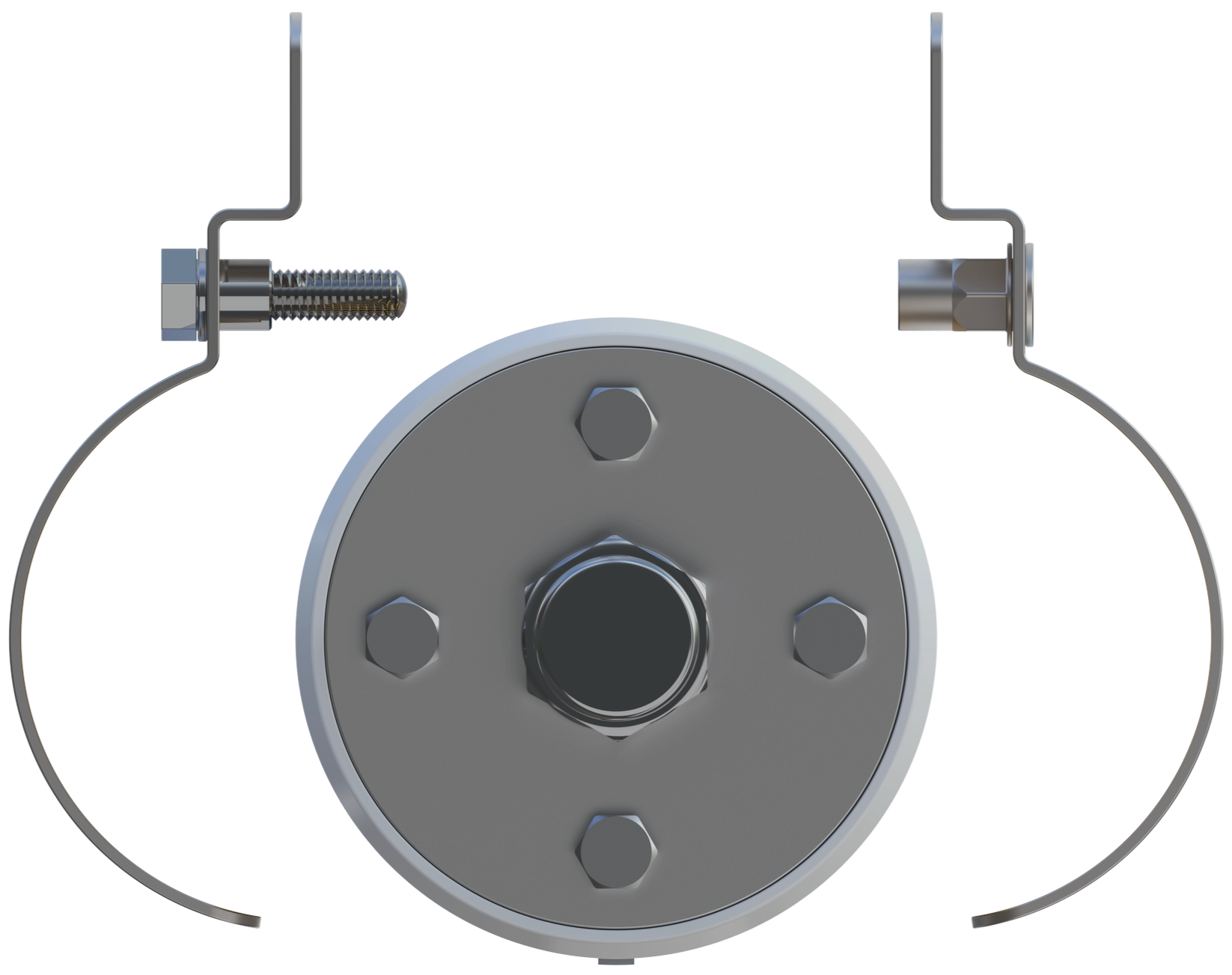
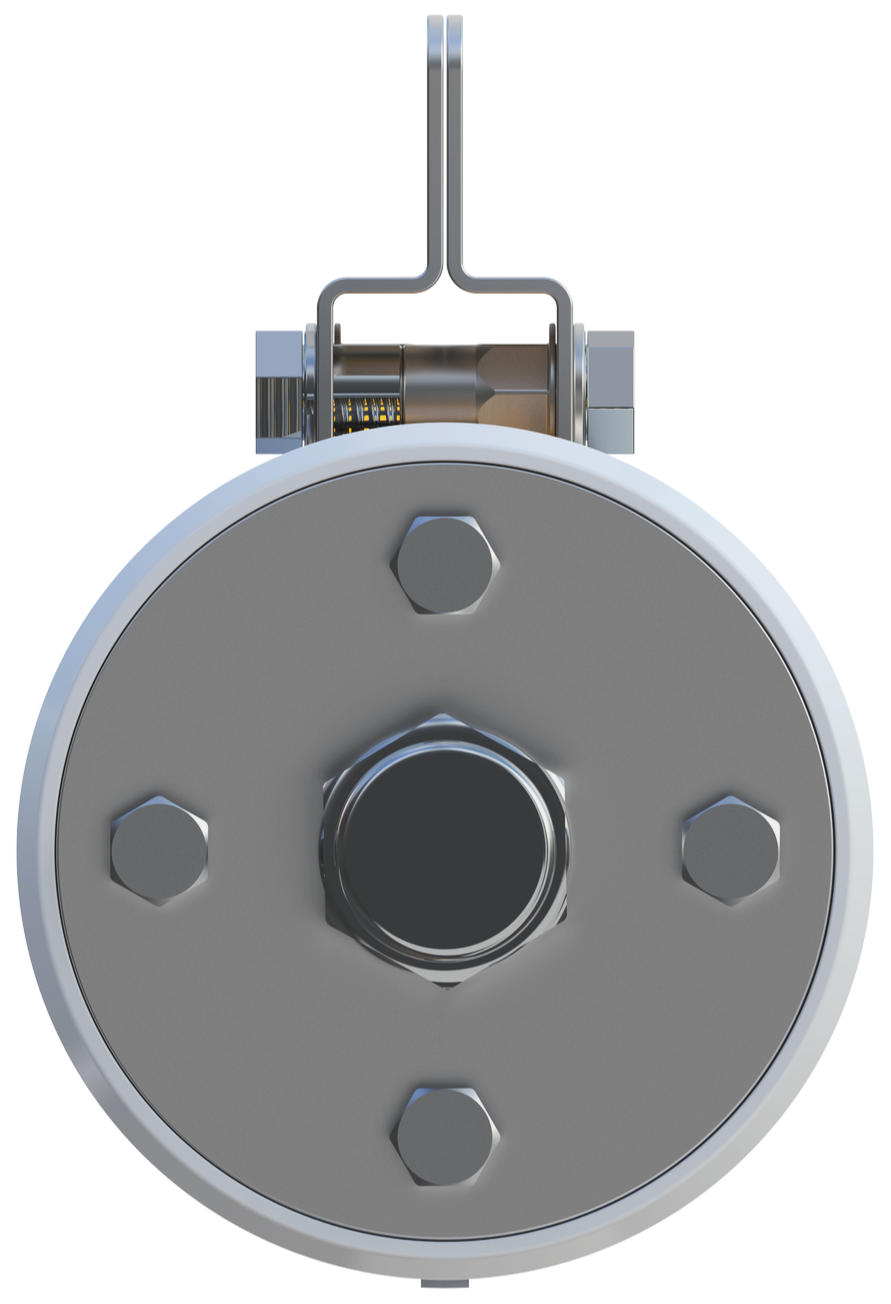
Access and Connection
Torque-set end caps provide easy access for connection, adjustment and long-term servicing. DIP controls are positioned opposite the cable entry for easy adjustment after installation, with internal lever connections and replaceable EPDM seals simplifying maintenance. Optional through-wiring and breather configurations are available where required.

Fail-Safe Driver Protection
The fully potted IP67 SELV power supply features a range of additional protective measures to ensure long-term operation.
- Flicker-Free EN 61000
- Under-Voltage Protection
- Over-Voltage Protection
- Short-Circuit Protection with Auto-Recovery
- Over-Temperature Protection
- Wide Input Range 90-305VAC
- Wide ambient operating range subject to specification
- Service life 100,000 h Subject to Remote-Mount Ambient Conditions
Find out more about our LED Options and Performance
Installation
PV3 has been engineered to simplify installation. Torque-set, CNC-machined 316 stainless steel end plates, recessed into the end caps, protect the EPDM sealing system while providing easy access to the power connection and output-selection DIP switches, located at opposite ends of the luminaire. This simplifies connection, commissioning and future output adjustment without compromising ingress protection.
Open-loop, two-piece 316 stainless steel mounting brackets securely clamp the luminaire while allowing free drainage during wash-down and rotational adjustment for precise light distribution. The brackets can be positioned anywhere along the luminaire body, eliminating predetermined fixing centres. Closed-loop brackets are available for vertical mounting applications.