
“Freedom to specify any colour, or spectrum, across every luminaire in the Isollux range.”
Explore the full range of options available and discover what makes Isollux’s approach to LED development, selection and testing different.
LED technology is only part of our story. You can explore the broader principles behind our Product Design here.
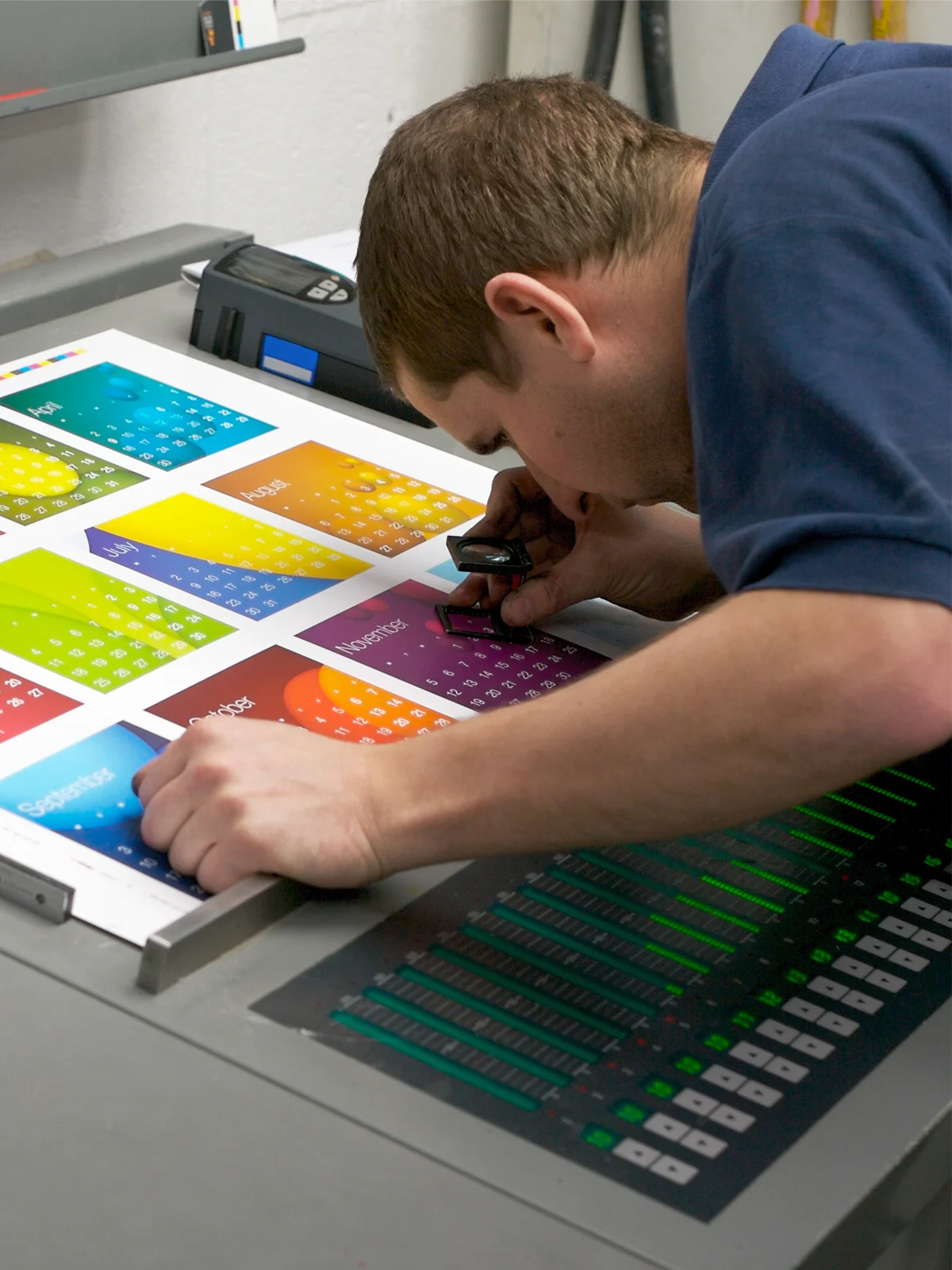
Colour Rendering and Colour temperature
Virtually every Isollux luminaire can be specified with the colour temperature, colour rendering and spectral characteristics best suited to the application, without changing product family or compromising engineering performance.
Freedom to specify the right light
With flat pricing across CRI 85, CRI 95, CRI 97 and Ambrite™, virtually every Isollux luminaire can be specified from 2,500 K to 7,000 K with SDCM ≤3. This provides the flexibility to optimise colour quality, spectral performance and efficacy for each application without changing product family or increasing luminaire cost.
Nominal specifications include CRI 85 for general applications, delivering R9 ≥20 with maximum efficacy, CRI 95–97 for colour-critical inspection and manufacturing, and Ambrite™ for photosensitive and environmentally sensitive applications. Exact performance varies according to colour temperature and product configuration.
The same luminaire can be specified with different colour temperatures or colour rendering characteristics across a project, maintaining a consistent visual appearance while optimising each area for its intended task. Where required, multiple LED types can also be incorporated within a single luminaire to support colour-critical inspection, COI compliance, circadian lighting and other specialist production requirements.
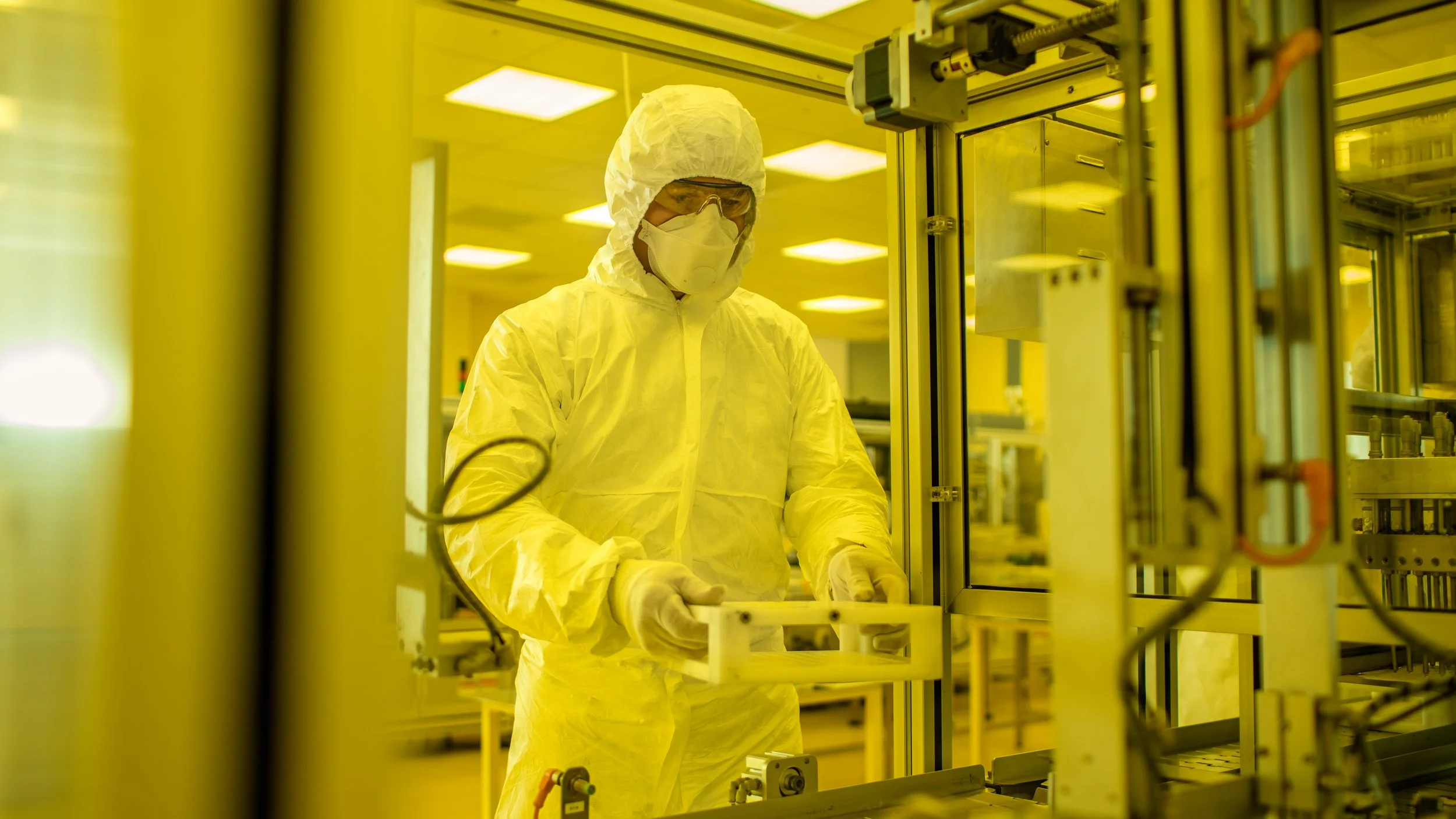
Ambrite™ – Eliminating Blue Light
Isollux offers advanced spectral control across virtually any luminaire in the range to suit specialist applications, while maintaining the performance, reliability and support of a standard product family.
Environmental and Photo-Sensitive Applications
Ambrite™ is specified for applications requiring the elimination of blue light below 500 nm. Available across the standard Isollux range, it enables specifiers to achieve precise spectral control without being restricted to a limited range of specialist luminaires.
Typical applications include pharmaceutical manufacturing, brewing, photosensitive production, outdoor logistics and distribution centres in environmentally sensitive locations where reducing insect attraction for exported goods, or protecting sensitive nocturnal pollinators is critical.
Delivering outputs of up to 150 lm/W, Ambrite™ significantly outperforms filtered or optically modified alternatives while maintaining the optical performance of the lens and luminaire.
The same engineering approach also supports a wide range of less common application-specific spectral challenges.
To find out more download our Ambrite Brochure

Beyond the standard options
High-density LED arrays allow multiple LED types to be incorporated within a single luminaire, supporting selectable CCT, DT8 tunable white and application-specific spectral control without significantly compromising efficacy, reliability or long-term service life
Multi-Spectrum Solutions Within a Single Luminaire
The high-density Isollux LED architecture allows multiple LED types to be incorporated within a single luminaire while maintaining the conservative drive currents that underpin long-term reliability and service life. This enables custom colour temperatures, dual-CCT switching, DT8 tunable white and application-specific spectral solutions for human, horticultural, aquaculture and industrial applications, while maintaining the optical performance, ingress protection and reliability of the standard product.
For simpler applications, bi-channel switching provides an effective way to alternate between two defined light sources or spectra, including standard white light and Ambrite™, without the complexity of continuous colour control.
Where more sophisticated spectral management is required, DALI DT8 provides automated control of tunable white, circadian lighting and multi-channel spectral blending. This extends the same Isollux architecture to human-centric lighting, horticulture, aquaculture, specialist manufacturing and other bespoke spectral applications, including our T5 and T8 retrofit systems.
Have a specialist requirement?
Talk to our engineers about colour, spectrum, environmental performance or project-specific solutions.
Contact us for engineering support
Always ask these four questions.
– What's the duration of the LM-80 report?
– Does the projection exceed 6 x LM-80?
– Which edition of TM-21 has been used?
– Does the product warranty match the prediction?
Unsure why? Read on…
Comparing Apples with Apples
LED performance claims are only meaningful when compared on the same basis. Checking the test data, methodology and reporting limits behind each claim allows specifiers to make a genuine like-for-like comparison.
Understanding the Data-and How We Apply It.
LM-80 provides the measured data used to project long-term LED lumen maintenance. The longer the test programme, the greater the proportion of measured data available before projection begins.
Because TM-21 limits reported projections to a maximum of six times the LM-80 test duration, longer programmes provide a stronger engineering foundation, reduce reliance on extrapolation and increase confidence in long-term performance projections.
Lumen maintenance projections beyond the recognised IES six-times reporting limit fall outside the intended scope of the standard and should not be used for technically valid comparisons.
Independent LM-80 Reports
Most Isollux luminaires utilise high-density XE dual-die 2835 arrays, supported by an independent 17,000-hour LM-80 programme. This provides sufficient measured data to support reported lumen maintenance projections of up to 102,000 hours, within the recognised IES six-times reporting limit, providing the engineering evidence to support published L85 10-year (24/7) performance claims across the stated ambient operating range of the luminaire.
Isollux Viper, Vixen and Cryolux High Bay utilise 5050 chipsets, currently supported by independently verified 10,000-hour LM-80 programmes. The shorter test duration limits valid reported lumen maintenance projections to 60,000 hours, again within the recognised IES six-times reporting limit, providing the engineering evidence to support published L85 10-year (14/7) performance claims across the stated ambient operating range.
What is TM-21?
First published by the IES in 2011, TM-21 established the industry's standard methodology for projecting long-term lumen maintenance from LM-80 test data. Successive editions have refined the methodology in response to improved engineering knowledge, longer-term test data and real-world operating experience.
TM-21 (2021) is the current IES methodology for reporting long-term lumen maintenance. Earlier editions use different calculation methods that can produce more optimistic projections, making direct comparison unreliable unless the edition used is disclosed.
While every edition retains the fundamental principle that reported lumen maintenance projections must not exceed six times the duration of the supporting LM-80 programme, the methodology used to calculate those projections has evolved significantly.
Whats changed?
TM-21 (2021), the current IES standard, places far greater emphasis on the later stages of the LM-80 test, where LED behaviour is better established. By reducing the influence of early-life data that led to more optimistic long-term projections under earlier editions, it provides a more conservative and technically robust methodology for reporting lumen maintenance.
For manufacturers, adopting the latest methodology can reduce published lumen maintenance projections compared with earlier editions. Consequently, products supported by different editions of TM-21 should not be compared directly, even where both are supported by valid LM-80 reports.
When evaluating published performance claims, it is therefore reasonable to ask which edition of TM-21 has been used. Without that information, two products may appear to offer similar long-term performance while being based on fundamentally different reporting methodologies.
Our LED development is based on long term relationships, not market trends.
For almost two decades, Isollux has developed its proprietary LED chipsets with the same manufacturing partner. A relationship built on shared experience and trust, providing continuity of supply and direct access to the engineering resources behind the technology, supporting both our product development roadmap and unique application requirements.
Commitment to Continuous Development
Rather than changing LED suppliers to follow market trends, Isollux made the deliberate decision to continuously develop its proprietary LED technology through the same long-term engineering partnership. This continuity has allowed each successive generation to evolve from proven technology, combining independent testing with the experience gained from almost two decades of real-world installations before release into production.
Since introducing its first proprietary LED chipset in 2007, every generation has been refined to improve efficacy, power density and thermal performance while maintaining the proven engineering principles that underpin long-term product continuity. From the original EF chipset, through UT and HE, to today's XE dual-die generation, each development builds directly on the performance and engineering knowledge gained from its predecessor.
20 Years of Isollux LED Development History
The following highlights the broad design limits of each major generation of Isollux LED technology and how successive releases built on genuine field experience developed with the same engineering team and manufacturing partnership.
Incremental improvements were made within the UT and HE generations, but neither was substantially replaced until the dates shown.
These extended development cycles have created a significant catalogue of long-term field performance data, which continues to inform our engineering, service-life predictions and warranty decisions.
2007 — EF | First Generation
The starting point
Limited to 1200mm LED tube
Alumininum High Density PCB
LED Stable at Tc 55ºC Limit product to suit
EF 2835 — Single Die
PPA1 substrate
Tc limited to 55°C
Maximum 0.06 W
Up to 120 lm/W
CRI 75
Product: Ecofluro T8 LED tube
Warranty: 3 years
Field result: ≥ L70 (B10) >100,000h
Sensitive to ambient temperature
2009 — UT | Second Generation
Higher output - Physically Limited.
Introduction of 1500mm LED tube.
Alumininum High Density PCB
LED Stable at Ta 85ºC resets product limit
UT 2835 — Larger Single Die
PPA2 substrate
Tc up to 75°C
Maximum 0.2 W
Up to 150 lm/W
CRI 85
Product: T8 LED early HighBay
Warranty: 5 years (From 2012)
Field result: ≥ L70 (B10) >100,000h
Sensitive to ambient temperature
2014 — HE | Third Generation
Higher power - Higher Power
Supports High CRI at Higher Power
Alluminum High Density PCB
HE 2835 — Dual Die
First Isollux dual-die 2835
PCT1 substrate
Stable to Tc 85°C
Maximum 1 W
Up to 180 lm/W
CRI 85
Product: Multiple Products
Warranty: 5 years
Field result: ≥ L80 (B10) >100,000h
Ambient Stability up to Ta 50ºC
2026 — XE | Fourth & Current Generation
Improves LLF at High Ambient
Supports Full Ambient Operation
Alumininum High Density PCB
XE 2835 — Dual Die
Second generation dual die 2835
PCT substrate
Tested to Tc 103°C
Maximum 1.2 W
Up to 220 lm/W
CRI 85
Product: Multiple Products
Warranty: 10 years* ( ≥Ta50ºC)
TM-21-21: L80 (B0) >100,000h
Lumen Stability up to Tc 103ºC
*Some products are limited to shorter warranties when exposed to extreme conditions, chemicals, steam or extreme ambient and warranties are dependent on correct installation and approved installation to the stated limits of the luminaire.
Explore our design philosophy: product design
Accuracy and Validation
Every published Isollux engineering claim is supported by independent testing and documented evidence. We work hard to keep this information accurate and current and welcome feedback if you identify anything that requires clarification or correction.
Independent Validation
Every published Isollux performance claim is supported by independent testing and documented engineering evidence.
Appropriate supporting technical information is available, where required, to substantiate published specifications while protecting proprietary engineering, supplier intellectual property and commercially sensitive information.
We welcome informed technical evaluation of our published performance data and encourage the same level of scrutiny to be applied to competing products. Engineering claims should always be supported by recognised standards, transparent methodology and evidence capable of independent technical review.
Technical Information
Every reasonable effort is made to ensure the information published by Isollux is accurate and current at the time of publication. As part of our programme of continuous product development, specifications, dimensions, materials and performance data may change as products evolve and engineering improvements are introduced.
Where clarification is required, or published information is critical to a project, we encourage consultation with our engineering team. We are committed to ensuring project-specific information is accurate, current and appropriate for its intended application.